Ngorongoro Conservation Area is named after the world's largest intact and unfilled caldera, the Ngorongoro Crater, and provides a home for Maasai pastoralists who live in relative harmony alongside the region's abundant wildlife.
The area now known as the Ngorongoro Conservation Area has been occupied by hominid species for approximately three million years — proven by fossil evidence found at Olduvai Gorge and Laetoli. Around the time our ancient ancestor Australopithecus afarensis was leaving footprints that would become one of the most important anthropological discoveries in history, the Ngorongoro Crater was formed by a major volcanic eruption.
For the past 2,000 years the area has been the province of pastoralist tribes, including the Mbulu, the Datooga and, most recently, the Maasai. The first Europeans arrived in 1892, and the Ngorongoro Conservation Area was established as a wildlife sanctuary in 1976. Three years later it was inscribed as a UNESCO World Heritage Site, in recognition of its importance as the only conservation area in Tanzania that protects wildlife while allowing human cohabitation.
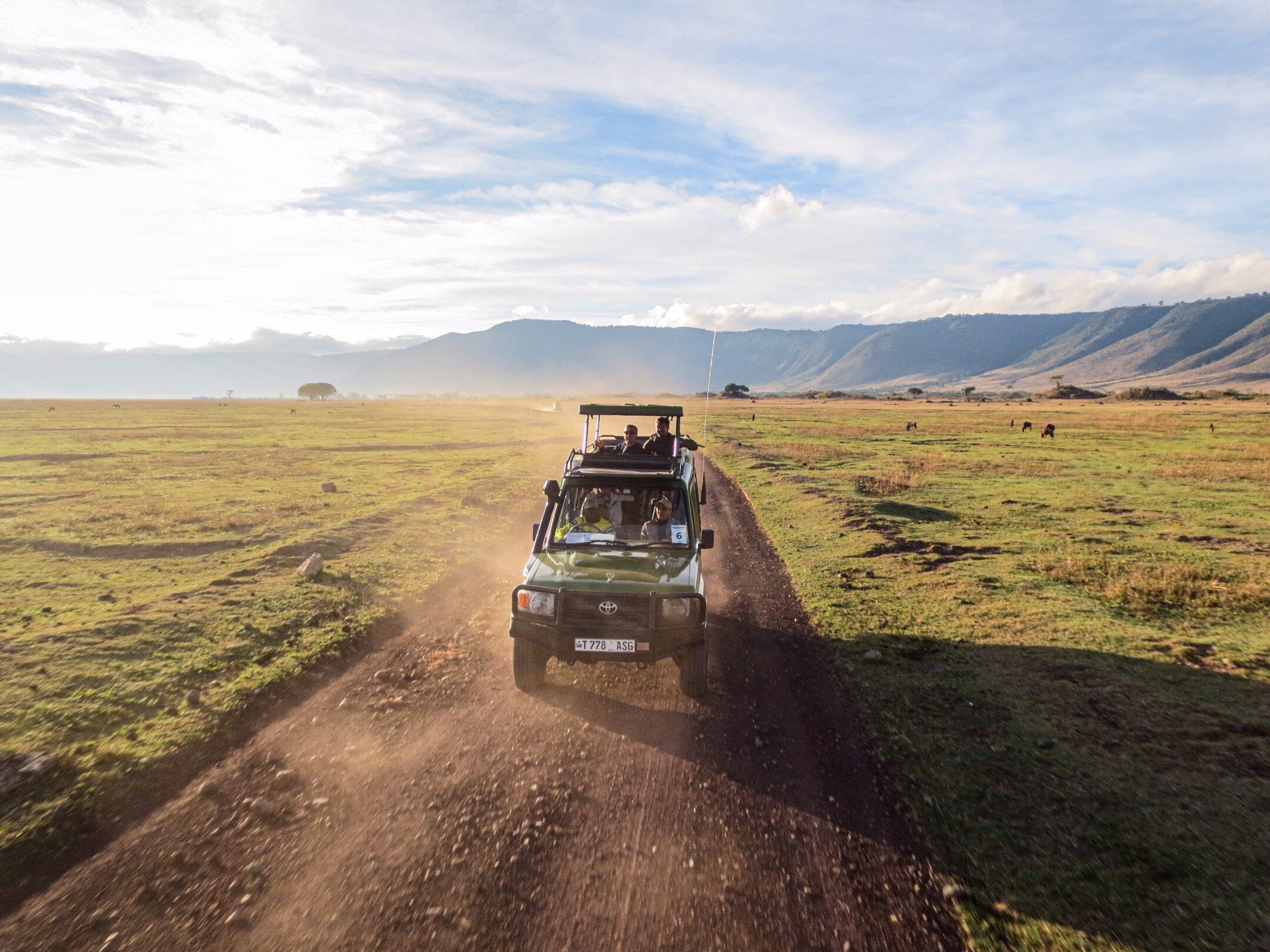
The Ngorongoro Conservation Area is home to an incredible abundance and diversity of wildlife, including Grant's and Thomson's gazelles, wildebeest, zebra and large herds of buffalo. The Ngorongoro Crater alone sustains around 25,000 large game animals, living at close quarters in the natural enclosure of the caldera — making it the best place in Tanzania to see the Big Five. It also supports the only viable population of Black Rhino left in the country, while its tusker elephants are among the largest on the continent.
Every year, the grass plains around the crater play host to the herds of the Great Migration, usually numbering close to two million wildebeest, zebra and other antelope. This sudden abundance of prey attracts many predators, including lion, cheetah, hyena and the endangered African wild dog. Around 500 bird species have been recorded in the conservation area, of which 400 can be found in the crater itself, including endemics and near-endemics such as the Jackson's Widowbird, the Hartlaub's Turaco and the Rufous-tailed Weaver.


 Issy Adventures